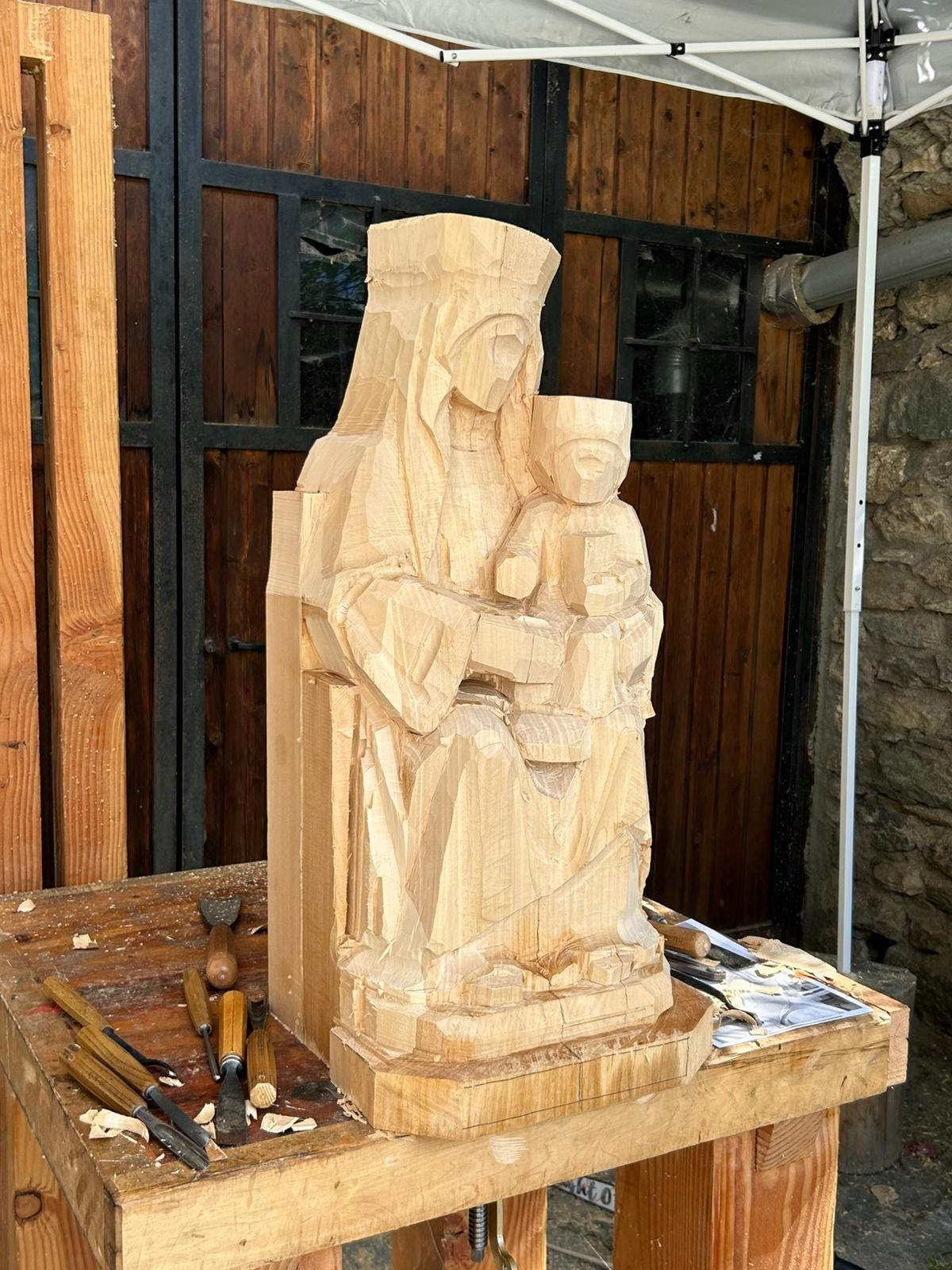
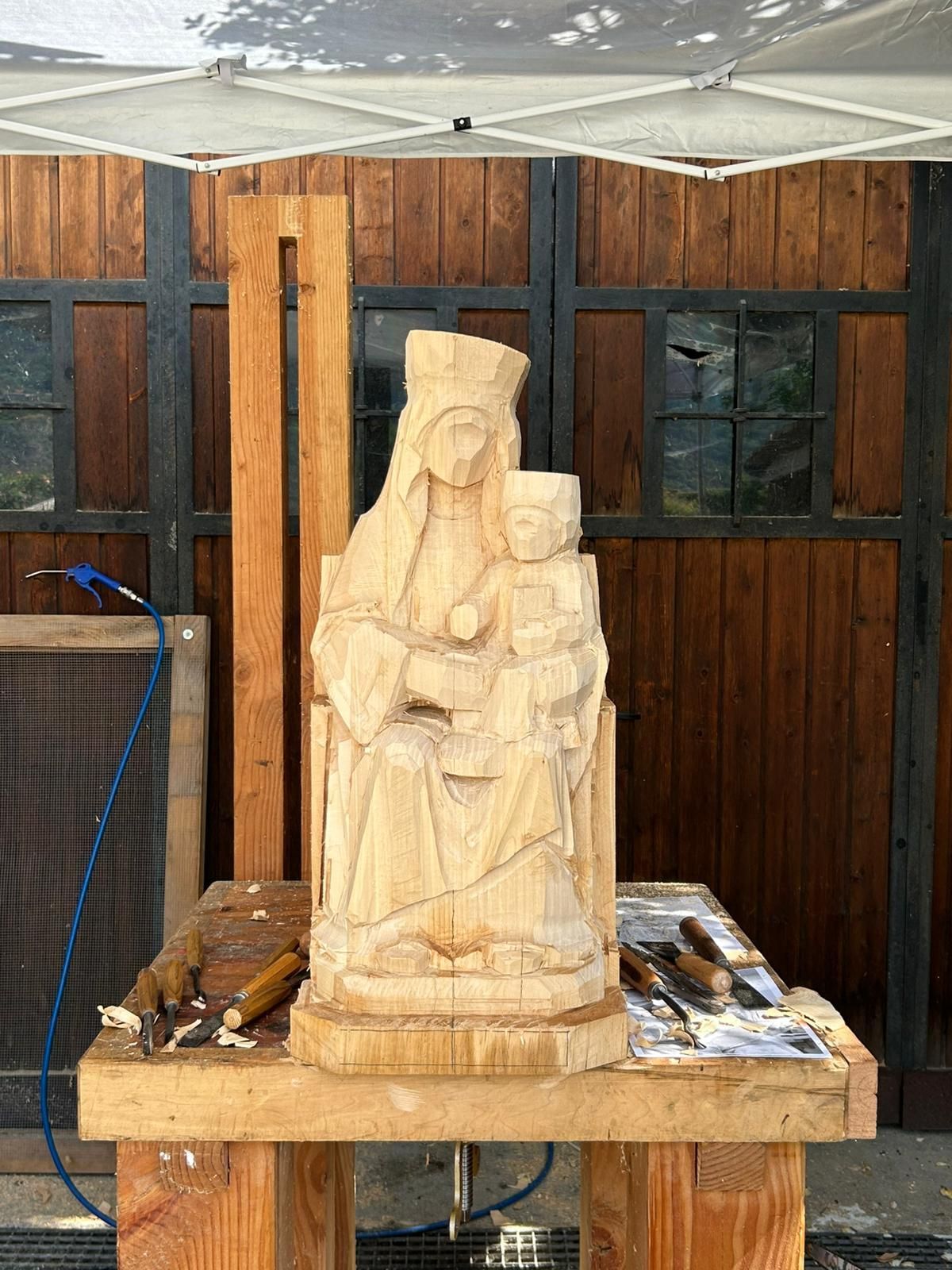
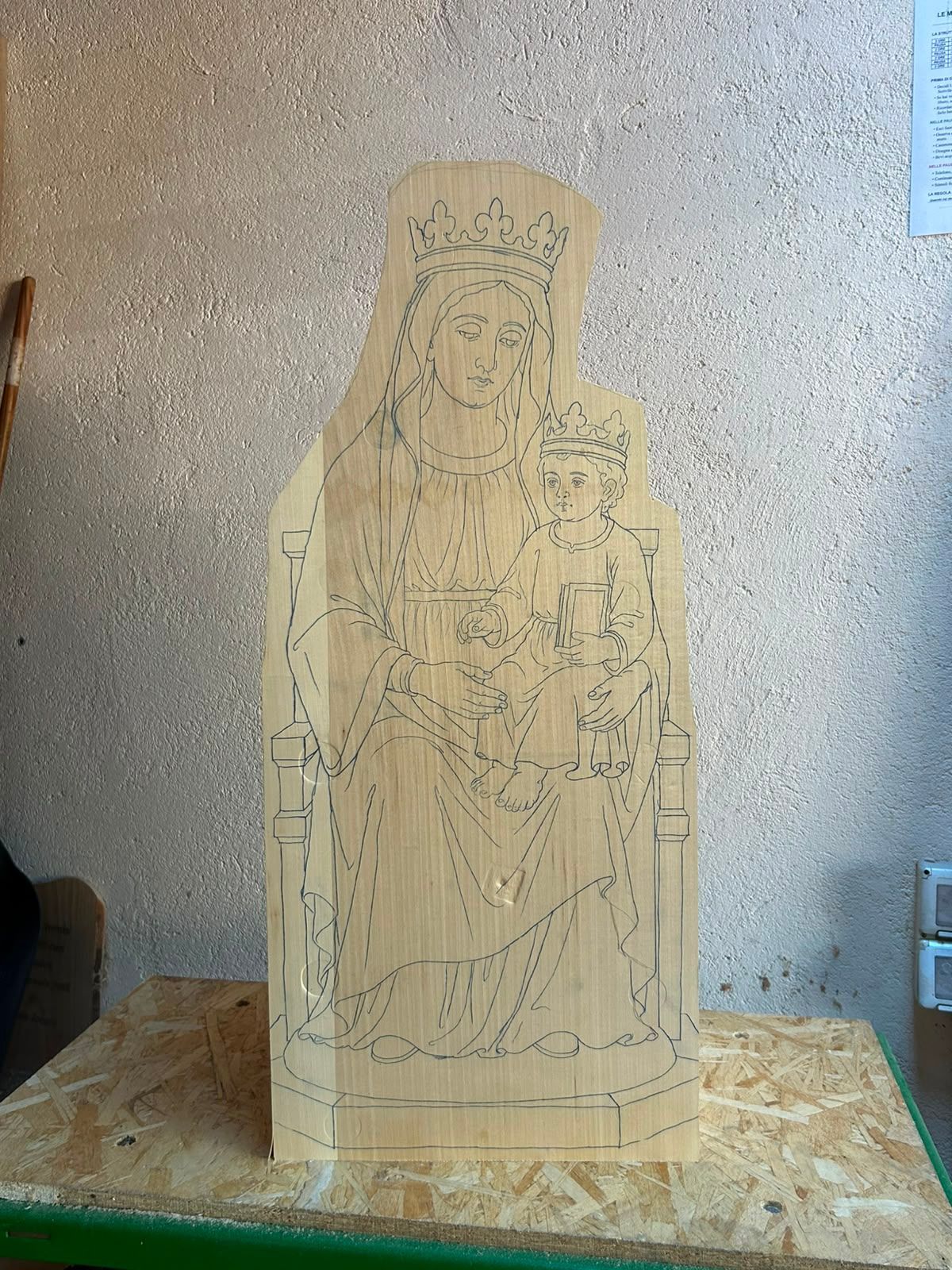
The Statue of Our Lady of Ulting is Under Construction!! Updated 22 June 2026
Thank you to ALBL Oberammergau GmbH, Woodcarving Studio for Sacred Art!
What is a Lord of the Manor?
Manorial Lordship as Feudal Nobility:
A Concise Academic Analysis
Condensed from the original article authored by Kevin D Couling – Lord Couling of Cowlinge
Manorial lordships occupy a distinct position within English social history. Although often misunderstood today, historical evidence demonstrates that Lords of the Manor constituted a feudal nobility, separate from but parallel to the hereditary peerage which once formed the House of Lords, however were finally removed by the House of Lords (Hereditary Peers) Act 2026, which was passed into law on the 29 April 2026.
Historical Foundations
Across Europe, the title “Lord” denoted noble rank. As “a Lord is a Lord,” reflecting the universal feudal understanding that lordship itself implied nobility. When the Norman system was introduced to England, governance of a manor required noble authority: “it was not possible… to allow a peasant or freeman to rule over a Manor/Seigneury Fief.” Manorial Lords held courts, exercised jurisdiction, gathered taxes on behalf of the Sovereign, and were frequently knights, placing them above non-noble classes in the medieval hierarchy. The Sovereign owned all land and thus from his hand created each manor and thus each noble feudal Lord to govern the manor under the sovereign’s authority, even when a manor is passed/traded or sold or given in marriage, it still retains its noble status in perpetuity and as of the 1922 Act, legally considered as an incorporeal hereditament.
Legal Continuity
Neither the Tenures Abolition Act 1660 nor the Law of Property Act 1922 removed the noble status from manorial lords. These acts abolished feudal tenure and Copyhold to Freehold landholding but did not extinguish the dignity attached to the Lordship. As the document notes, “this change in the law… did not change the noble status of the Lord, all it changed was the status of the land.” After 1922, lordship of the manor became an incorporeal hereditament, comparable to Scottish feudal baronies after 2004.
Customary Recognition
Noble status in England has always included customary and courtesy elements. The continued acceptance of the title “Lord” on passports, driving licences, and formal correspondence demonstrates ongoing recognition. The document correctly states that noble status is “implied and a courtesy noble status by the very usage of the Title ‘Lord’.” Thus customary usage is as follows: Lord of the Manor of X or Lord surname of X or Lord of X.
Relationship to Peerage
Early hereditary peers were drawn from substantial manorial lords who possessed multiple estates and advised the Crown. Thus, manorial lordship formed the territorial and administrative foundation of the emerging peerage. Modern life peerages lack this historical connection, making manorial lordship one of the few surviving links to England’s original feudal aristocracy.
Conclusion
The historical, legal, and customary evidence supports the conclusion that a manorial lordship is feudal nobility. As I state, “I have found no proof… that has implied or removed the status of Nobility from the Lord of the Manor.” While distinct from hereditary peerage, the dignity of a lordship remains rooted in centuries of governance, landholding, and tradition, preserving culturally one of England’s oldest noble aristocratic identities.
All intellectual property rights belong to Kevin D Couling-Lord Couling of Cowlinge 13 May 2026